
Your Daily Joint Mobility Routine
Why joint mobility is the foundation for strength, speed and power — and how to train it every morning.
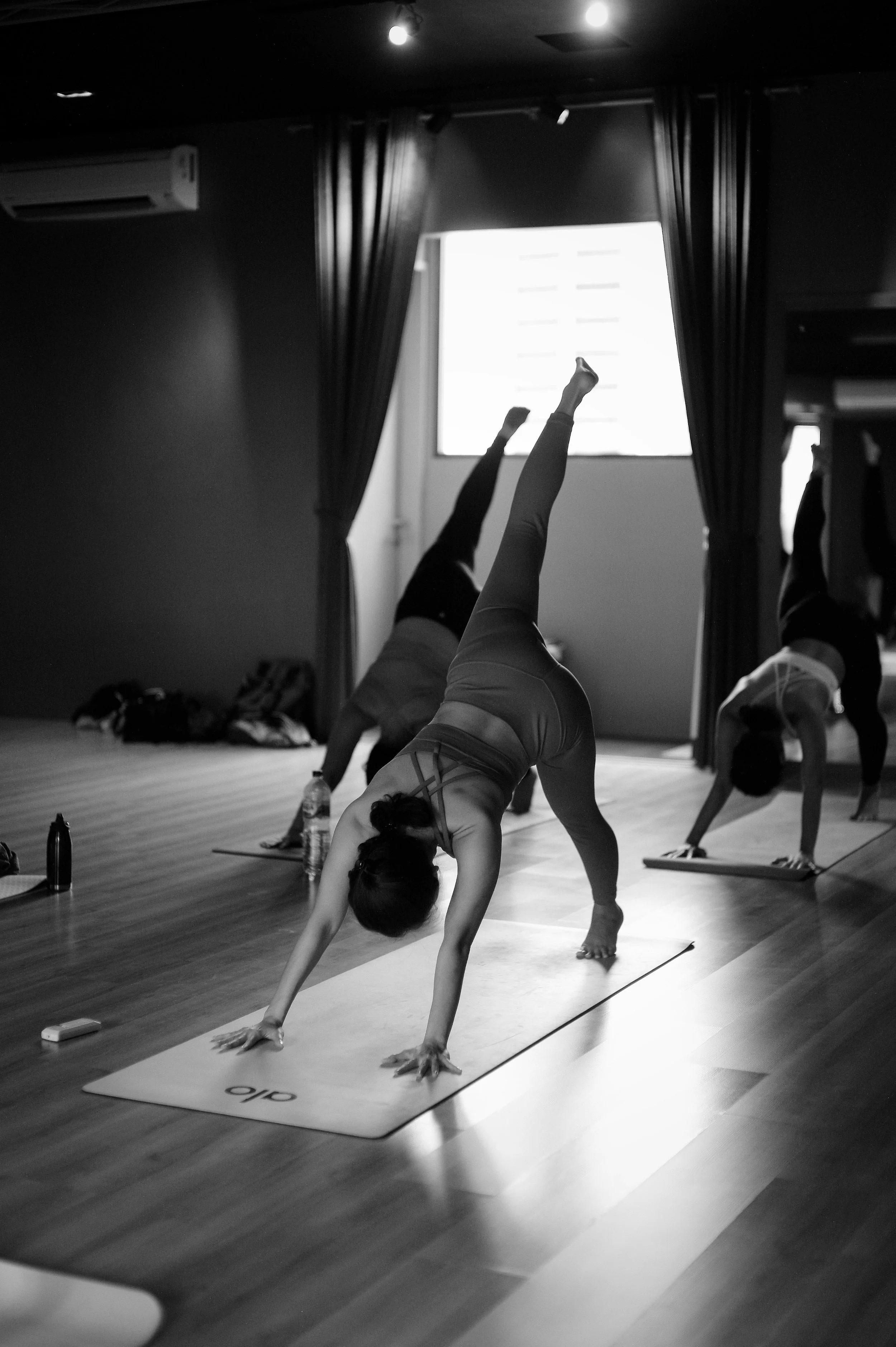
Human beings are multi-dimensional beings. We are designed to move dynamically in various ranges of motion.
As a Functional Range Conditioning Mobility Specialist (FRCms) I help people restore lost ranges of motion, maintain joint health, and improve mobility so you can DO ANYTHING.
Mobility is the foundation for strength, speed, and power. It's essential in everything from power lifting, playing a competitive sport, to getting out of bed or walking the dog.
Movement = Health
Our health depends on movement. Movement is nature's anti-inflammatory pill. It pumps oxygen and nutrient rich blood to our cells. But cartilage, on the other hand, has no blood supply. It receives oxygen and nutrition from the surrounding joint fluid by diffusion.
During movement, pressure expresses fluid and waste products out of cartilage cells; when it is relieved, fluid diffuses back along with oxygen and nutrients. Joint mobility literally bathes your joints in synovial fluid and washes away calcium deposits and toxins, helping you move with more ease.
In life, we usually go about the same repetitive motions, rarely taking each joint through its full range of motion. As Dr. Spina, creator of the Functional Range Conditioning protocol says, “you will always regret not training the range of motion you got injured in.”
The bottom line is, if you don't use it you lose it.
We must move and train every angle and have control over our movements so the nervous system understands how to access and make use of the range of motion. This builds mobile joints and resilient connective tissue to bulletproof your body.
How and when to perform the routine
Perform the daily joint mobility routine, consisting of controlled articular rotations (CARs), EVERY DAY as a morning ritual and as a warm-up before exercise or play.
Instructions
Inhale, trapping air in the lower abdominal region while breathing shallow.
Stabilize all articulations and perform an isometric contraction throughout your body in order to ensure strict rotation in the desired joint.
Begin the articular rotation slowly, ensuring that it is occurring at the outer limit of movement.
Attempt to “expand the circle” with each repetition.
If you feel a painful “pinch” on the closed angle of a joint, skip over that area — it may indicate that there's a problem with the joint.
Most people will feel “sticky spots,” clicks, cracks and stutters in the movement, or may compensate by moving other parts of the body rather than isolating the joint. This is an indication that the joint and surrounding connective tissue requires more motion and neurological drive to restore lost ranges of motion and maintain the health of the joint.
Tension guidelines
For the isometric contraction of the body besides the joint in focus:
10–30% — morning routine
20–50% — warm-up before exercise
70%–max — training
Keep moving and living life in the FLOW!
Curious what this looks like for you?
Every journey starts with a complimentary consultation — your goals, your history, and a plan built around them.
Book a complimentary consultation
Kelly Corbett, M.S.
Fitness coach and Pilates teacher with over twenty years in the industry, now training clients from the jungle in Nosara, Costa Rica. Read her story